
What is a Holter monitor?
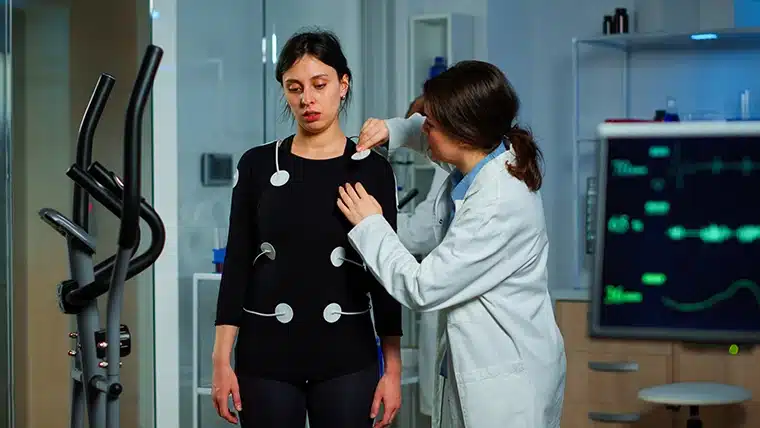
A Holter monitor device records your heart’s electrical activity. You wear it for 24-48 hours, during which time it continuously tracks your cardiac function and sends the information to your provider. Your Holter monitor is essentially a portable electrocardiography (ECG/EKG) machine. An ECG uses electrodes attached to your skin to detect cardiac activity. It’s the standard heart function test doctors use to assess symptoms of heart problems. A Holter monitor uses the same system but in a form small enough for you to carry comfortably.
A similar device is an event monitor. Like the Holter monitor, it’s a portable unit that records your heart activity. But with an event monitor, you activate it when you experience symptoms rather than the device recording all of the time.
Why would I need a Holter monitor?
Your doctor might suggest a Holter monitor if other tests on your heart fail to find the cause of symptoms such as:
- Pounding or racing heartbeat
- Irregular heartbeats
- Chest pain
- Shortness of breath
- Weakness
- Extreme fatigue
- Dizziness or lightheadedness
- Syncope (fainting)
- Inability to exercise
A routine electrocardiogram (EKG) or echocardiogram (heart ultrasound) might not always detect the cause of your symptoms, especially if they aren’t present all of the time. If these tests are inconclusive, wearing a Holter monitor could find the problem. Holter monitors are an effective way of evaluating arrhythmias — problems with the speed or rhythm of your heartbeat.
Our providers also use Holter monitors to detect silent myocardial ischemia. That condition affects the blood flow in your heart, so the muscle doesn’t get enough oxygen. It’s called silent ischemia, as there are no symptoms. A Holter monitor is also useful for checking whether cardiac treatments are working.
Wearable Holter Monitor: What to Expect
Before the Test
A wearable Holter monitor is a small, portable device that continuously records your heart’s electrical activity (ECG) over 24 to 48 hours, or longer if prescribed. It helps detect irregular heart rhythms (arrhythmias) that may not occur during a routine ECG.
To prepare for your test:
- Wear loose-fitting, comfortable clothing to accommodate the monitor.
- Avoid applying lotions, oils, or powders to your chest on the day of your appointment, as they may interfere with the electrodes.
- You may be asked to shave small areas of chest hair to ensure the electrodes adhere properly.
- Continue taking your medications unless your healthcare provider instructs you otherwise.
- Inform the staff of any skin sensitivities or allergies to adhesive materials.
During the Test
The appointment to attach the monitor typically takes 15 to 30 minutes.
During the exam:
- Several small adhesive electrodes will be placed on your chest and connected to a lightweight recording device that is worn on the chest.
- The monitor continuously records your heart’s electrical activity while you go about your normal daily routine.
- You may be asked to keep a diary of your activities, symptoms (such as chest pain, dizziness, palpitations, or shortness of breath), and the time they occur. This information helps correlate your symptoms with your heart rhythm.
- It is important to continue your usual daily activities, unless your healthcare provider gives you different instructions, as this provides the most accurate assessment of your heart’s activity.
- Keep the monitor and electrodes dry. Do not shower, bathe, swim, or use a hot tub while wearing the monitor unless you have been given a waterproof device and specific instructions.
After the Test
Once your monitoring period is complete:
- You will return to the office to have the monitor and electrodes removed or follow the instructions provided.
- A cardiologist will analyze the recorded heart rhythm and compare it with any symptoms documented in your diary.
- Your referring provider will review the results with you and discuss whether additional testing or treatment is needed.
A wearable Holter monitor provides valuable information about your heart’s rhythm during your normal daily activities, helping your healthcare provider diagnose arrhythmias, evaluate symptoms such as palpitations, dizziness, or fainting, and guide the most appropriate treatment plan.