
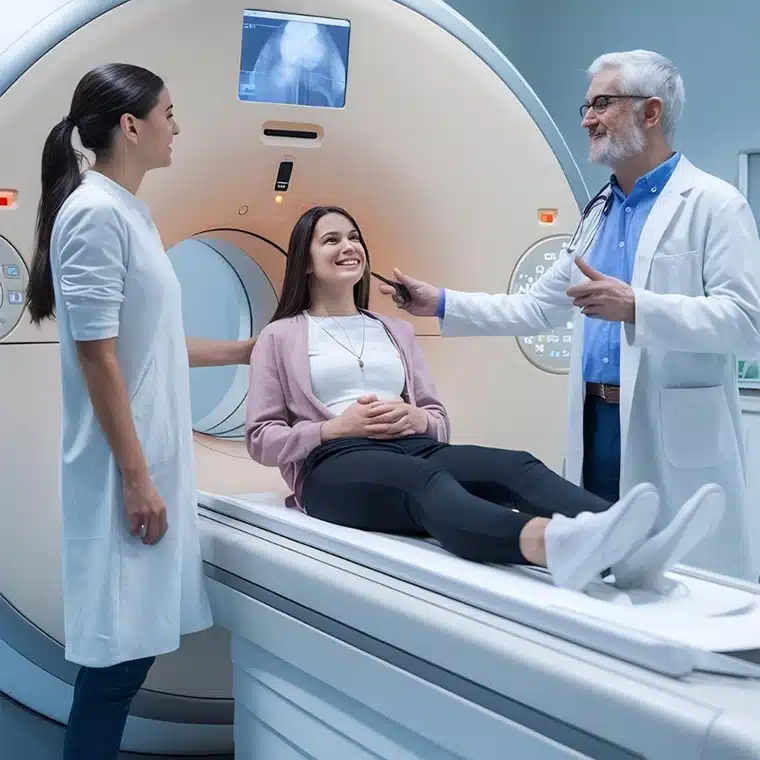
SPECT is a heart‑imaging test that shows how well blood flows to your heart muscle. This helps detect reduced blood flow, prior heart damage, or blockages that may need treatment. It’s painless, safe, and done right in our office.
SPECT Study: What to Expect
Before the Scan
A SPECT (Single Photon Emission Computed Tomography) study is a non-invasive imaging test used to evaluate blood flow to the heart muscle and help diagnose coronary artery disease.
To prepare for your exam:
- Follow any fasting instructions provided by your healthcare provider, which may include avoiding food and beverages for 4 hours before the test.
- Avoid caffeine (including coffee, tea, soda, chocolate, and certain medications) for at least 24 hours before the exam, as it can interfere with the results.
- Wear comfortable clothing and walking shoes if you will be performing an exercise stress test.
- Inform your healthcare provider about all medications you take, as you may be asked to temporarily stop certain heart medications before the test.
- Let the staff know if you are pregnant, breastfeeding, or have any allergies or medical conditions.
During the Exam
The study is typically performed in two parts: a resting scan and a stress scan, and may take approximately 2 to 4 hours, depending on the testing protocol.
During the exam:
- A small amount of radioactive tracer is injected into a vein in your arm.
- After allowing time for the tracer to circulate, you will lie on an imaging table while a specialized camera rotates around your chest to capture detailed images of your heart.
- For the stress portion, you will either:
- Exercise on a treadmill or
- Receive a medication that safely simulates the effects of exercise if you are unable to exercise.
- A second dose of tracer is administered during the stress phase, followed by another set of images.
- The procedure is painless, though you may feel a brief pinch during the IV placement or injection.
After the Exam:
Once the test is complete:
- You can usually resume your normal activities and diet unless your healthcare provider gives you different instructions.
- Drinking plenty of water throughout the day is recommended to help flush the radioactive tracer from your body.
- The amount of radiation used is small and generally considered safe.
- A cardiologist or nuclear medicine physician will review your images and send the results to your referring provider, who will discuss the findings with you and recommend any necessary next steps.
A SPECT study provides valuable information about how well blood flows to your heart, helping your healthcare provider diagnose heart disease, evaluate symptoms such as chest pain or shortness of breath, and guide the most appropriate treatment plan.